Active Aging Guides
Practical active aging guides with clear first steps, safety boundaries, respectful helper notes, and advice that stays specific to the task instead of drifting into generic routine language.
Use this archive as a practical starting point. The right guide should fit the real room, route, closet, meal setup, calendar, hobby, or support surface where the action will happen. Advice that only works in a perfect day is not the goal.
Small categories are kept when the topic is narrow on purpose. Start with the guide that matches the next visible step, keep the setup reversible, and stop when safety, pain, dizziness, confusion, or professional judgment becomes the better next move.
How to use this section
- Start with the smallest version that can be repeated safely in the real room, route, kitchen, closet, calendar, or daily context.
- Use stop signs seriously: pain, dizziness, confusion, shortness of breath, fall risk, or medication concerns call for qualified help.
- A helper should make the first step easier to repeat, not take over decisions the reader can still make.
- If the first attempt feels too large, shrink the plan before adding equipment, reminders, errands, or another person's schedule.
- Judge success by tomorrow's restart: the setup should be visible, understandable, and easier to use again after an imperfect day.
Guides in this section
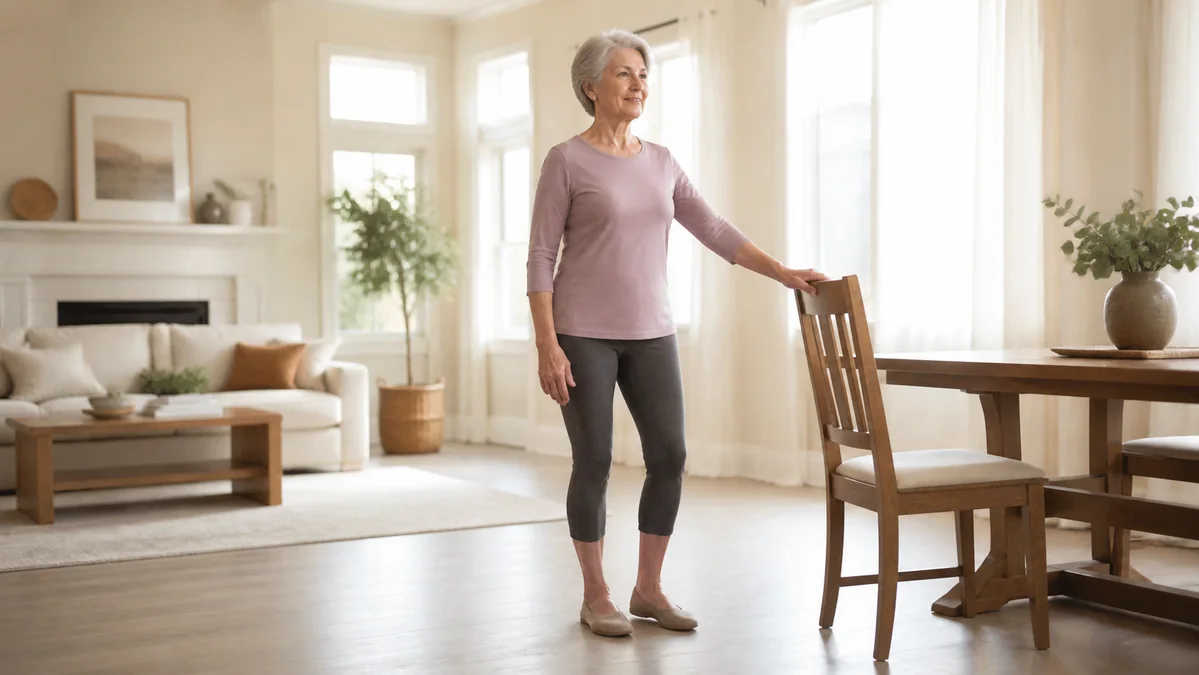
Balance Confidence at Home After 60
Confidence grows from repeatable, well-supported practice, not from closing your eyes or attempting risky balance tests alone.
At-Home Balance Routine for Older Adults
A practical five-move balance routine using a counter or sturdy chair for support.
Beginner Walking Plan for Seniors
A useful beginner plan makes the route predictable and increases only one part of the walk at a time.
Chair Exercises for Beginners
Chair exercise can build a consistent movement habit when the chair, range, and effort are chosen for control rather than intensity.
Comfortable Walking Shoes After 60: What to Look For
A practical shoe-check guide for older adults who want stable, comfortable walking without guessing in the store aisle.
Easy Balance Activities for Older Adults
Balance practice should make support easier to use and everyday movement more controlled, not create a risky test.
Easy Strength Activities for Older Adults
A useful first strength routine trains standing, pushing, pulling, and calf strength without chasing exhaustion.
Fall Prevention at Home: A Room-by-Room Action Plan
Falls are not an inevitable part of aging. The useful fixes are specific: a clear path, reliable support, better light, and attention to health changes.
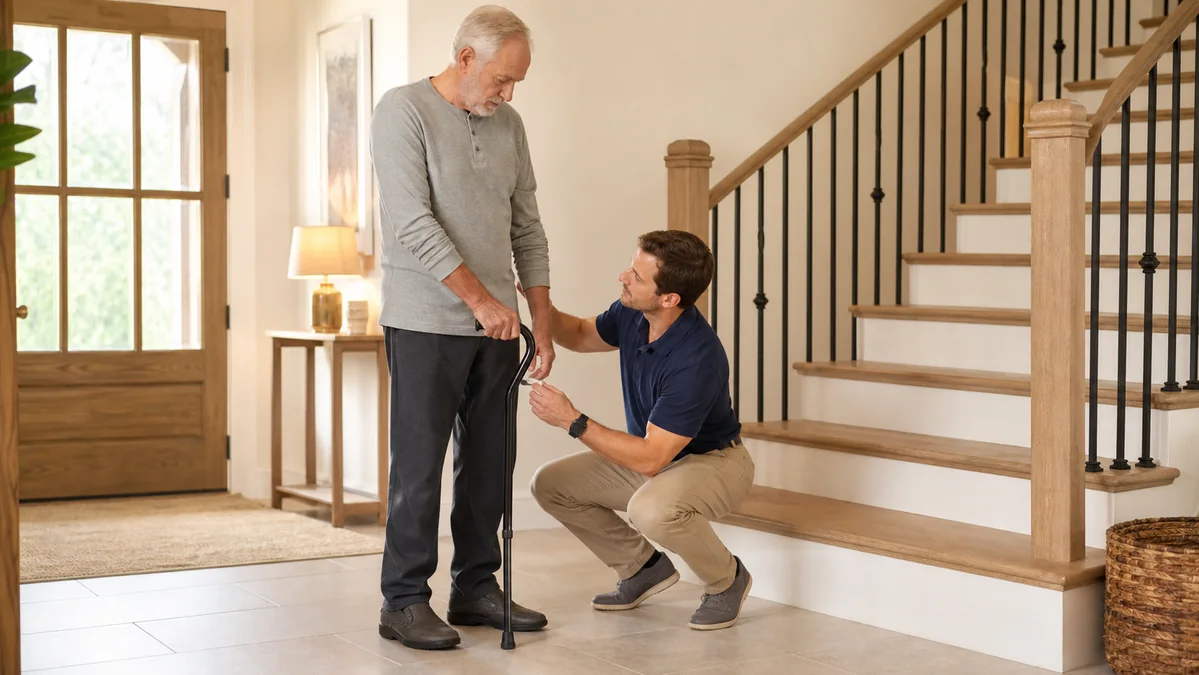
How to Fit a Cane or Walking Stick (Height, Hand, Stairs)
A properly sized cane supports balance without forcing you to lean. Use wrist-height sizing, the right hand, and safe stair habits.
Gentle Stretching After 60
Keep stretching gentle, supported, and easy to stop when a joint or muscle sends the wrong signal.
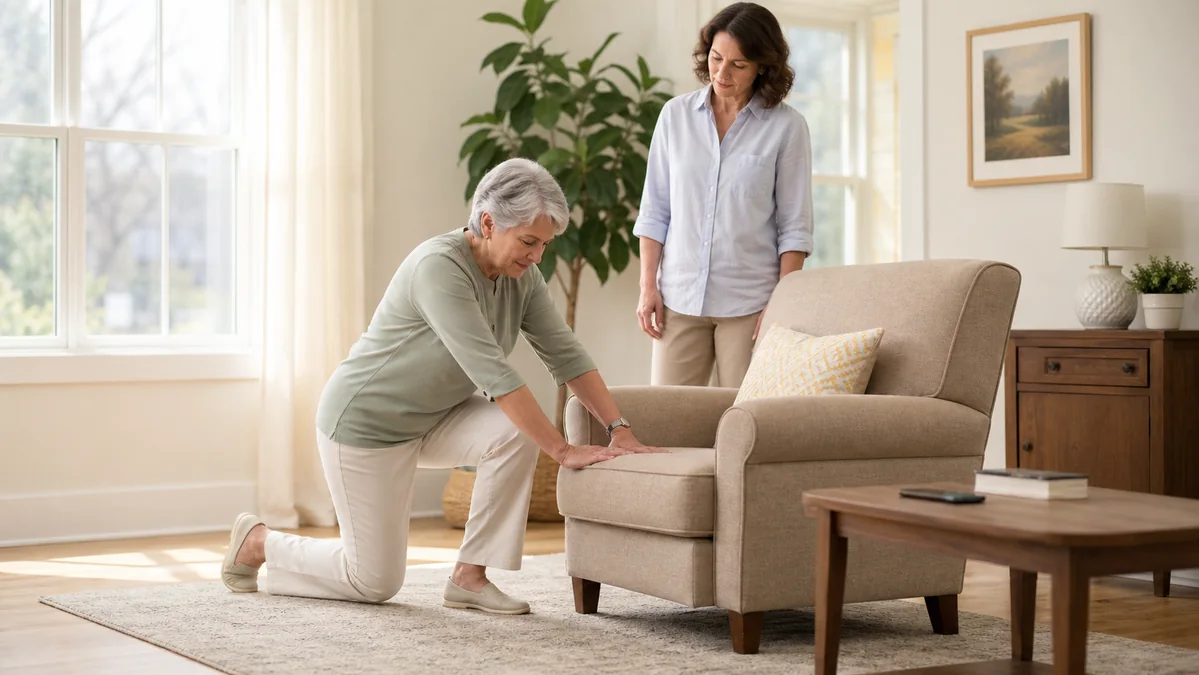
How to Get Up from the Floor Safely After a Fall
Use a calm pause, injury checks, and a step-by-step method to stand up using stable furniture—without rushing or twisting.
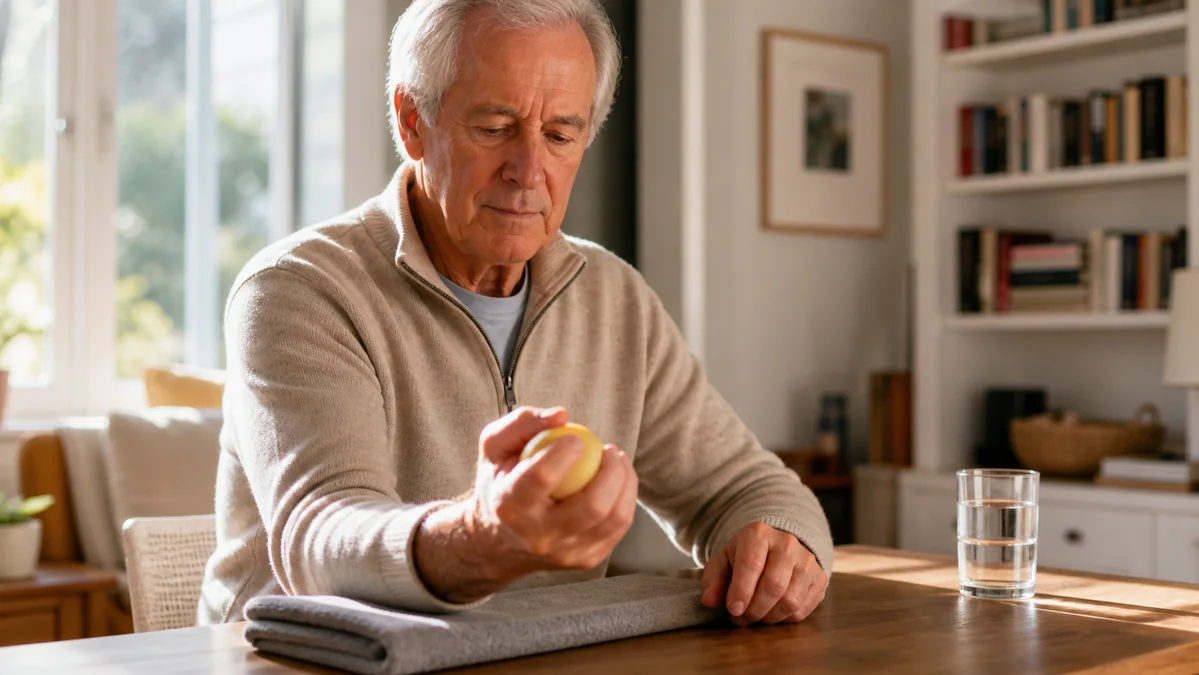
Simple Grip Strength Routine After 60 (5 Minutes a Day)
Build steadier hands for daily tasks with a short, low-equipment grip routine. Keep it gentle, consistent, and easy to progress.
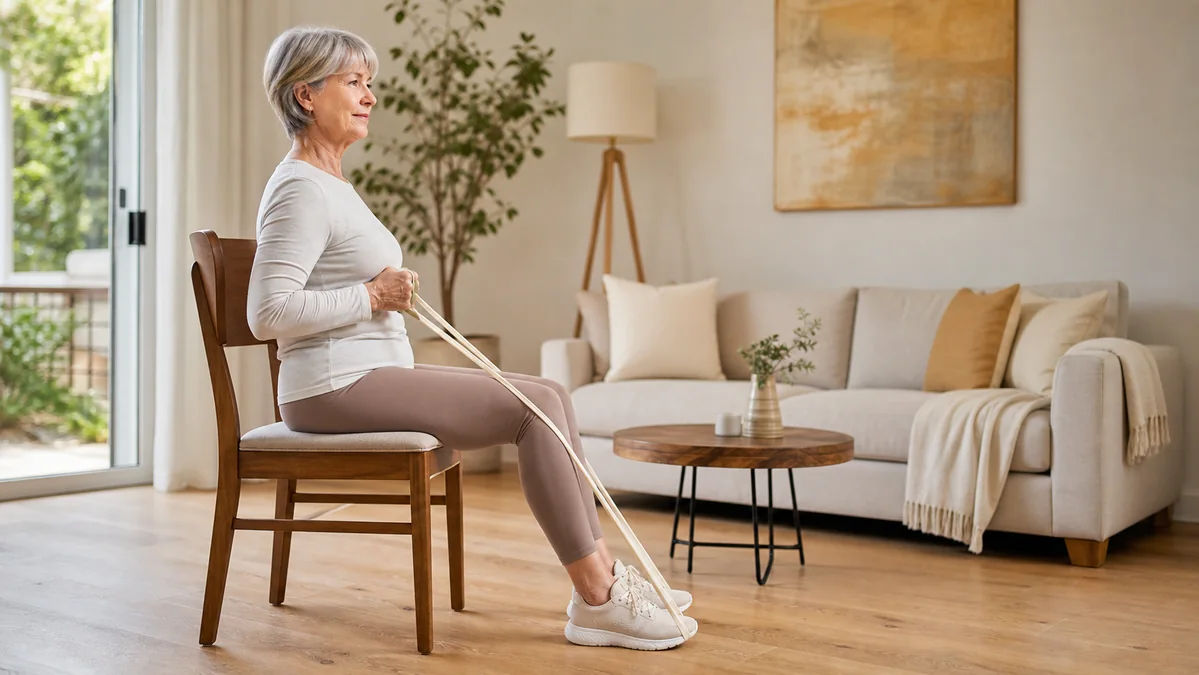
Simple Resistance Band Routine After 60 (Beginner, At Home)
Use a short band routine twice a week with stable footing, controlled range, and clear stop signals to build confidence safely.
How to Start Walking Again After 60
The first walks back should reveal what feels stable, not test how far you can push after time away.
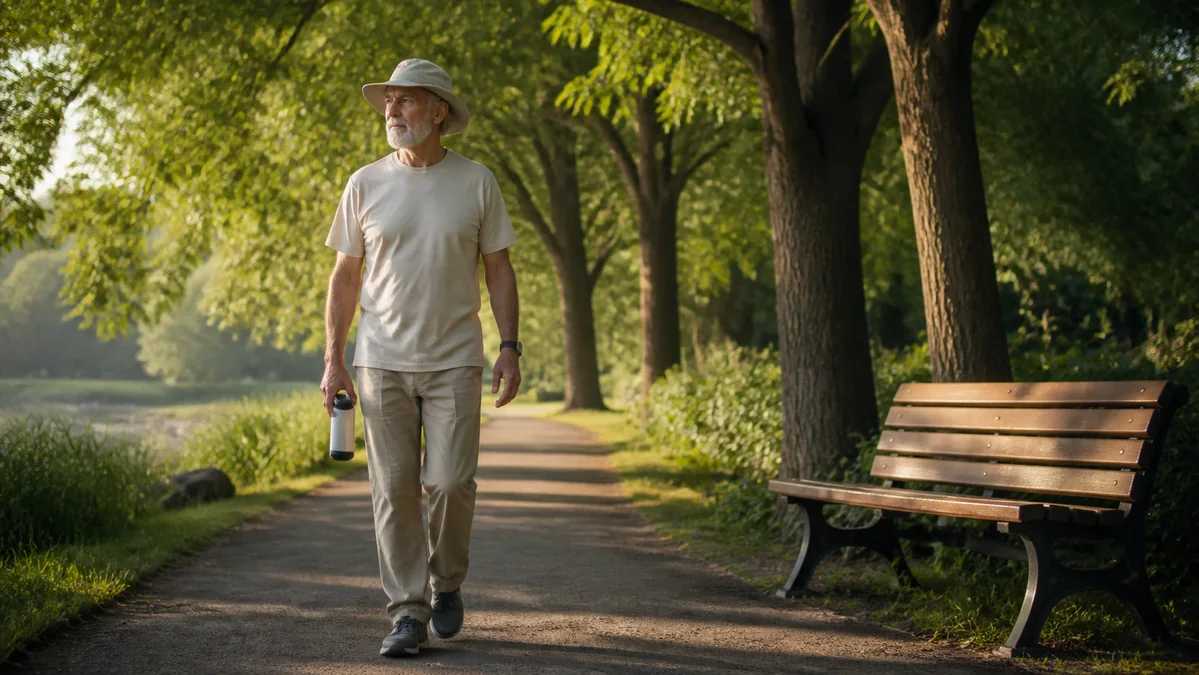
How to Walk in Hot Weather After 60
Keep summer walks shorter, earlier, and more flexible so heat does not turn a healthy habit into a risky one.