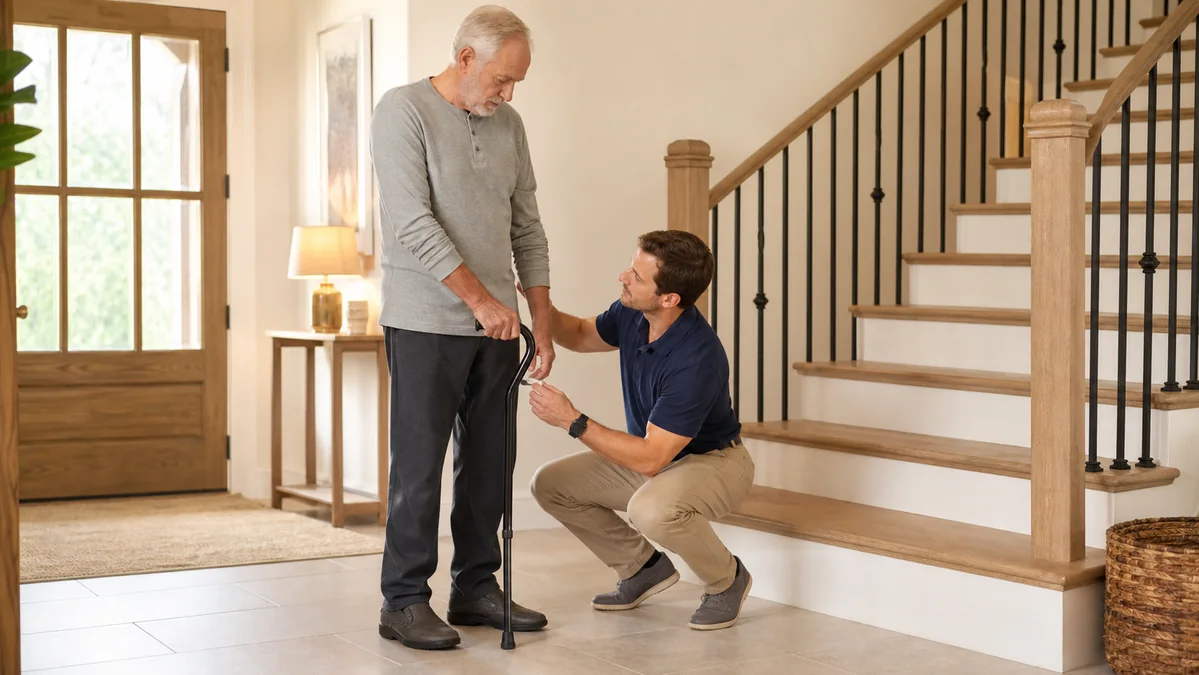
If a cane feels awkward, it's often not \"you.\" It's the fit. A cane that's too short makes you lean. A cane that's too tall makes your shoulder hike up. Either way, the cane can create new strain instead of support.
Quick answer: A common sizing check is wrist height: stand tall with arms relaxed, and the cane handle should line up around your wrist crease. Authoritative guidance on canes also emphasizes choosing a stable tip and using good posture.
This guide is general safety information, not medical advice. If you're unsure whether a cane is the right device, ask a clinician or physical therapist - especially after a recent fall.
Internal link: if you're working on overall fall prevention habits, start with Fall prevention habits at home.

Step 1: Size your cane using the \"wrist-height\" check
To size a cane:
- Wear your usual walking shoes.
- Stand tall with shoulders relaxed.
- Let your arms hang naturally by your sides.
- Adjust the cane so the top of the handle lines up near your wrist crease.
When you hold the cane, your elbow should have a small, comfortable bend - not locked straight and not sharply bent.
If you're using a wooden walking stick without adjustable height, consider switching to an adjustable cane until you confirm what height truly fits your stride.
Step 2: Which hand should hold the cane?
Many people do best when the cane is held in the hand opposite the weaker or painful leg. That can help your body offload and balance more naturally.
If you're not sure, use a simple test:
- Walk a few steps in a clear hallway with the cane in the left hand.
- Then switch to the right hand.
- Notice which side reduces limping and makes your shoulders feel more level.
If you have significant pain or new weakness, get professional guidance rather than experimenting through pain.
Step 3: How to walk with a cane (a simple rhythm)
Start slow and use a consistent pattern:
- Place the cane slightly forward.
- Step with the opposite foot.
- Keep steps short and stable at first.
Posture cues:
- Keep your eyes forward (not at your feet the whole time).
- Keep your shoulders down (no shrugging).
- Don't \"hang\" on the cane - think support, not dragging weight.
Internal link: if you're also rebuilding walking confidence, see Start walking again after 60.
Step 4: Stairs: go slow, use the rail, and keep it simple
The safest stair plan depends on your strength and the environment, but these principles are common:
- Use a handrail whenever possible.
- Take one step at a time if you need it.
- Don't rush and don't carry bulky items.
A well-known memory cue many people use:
- Up with the stronger leg
- Down with the weaker leg
If you feel unsteady on stairs, prioritize home safety changes and ask for an evaluation. Falls are common and preventable, and improving safety and supports is part of prevention.
Internal link: for a room-by-room safety scan, use Home safety checklist for older adults.
Step 5: Check the cane tip and the floor (traction matters)
A cane works only if it grips.
- Inspect the rubber tip regularly for wear.
- Replace the tip if it's smooth, cracked, or uneven.
- Be extra careful on wet floors, loose rugs, or uneven sidewalks.
If you do a lot of outdoor walking, a cane with a broader base or a tip designed for traction can help, but fit and technique still come first.
Practice the pattern before a longer walk
Use a clear, level hallway with another adult nearby if confidence is low. Practice for 2-3 minutes: stand from a firm chair using the chair arms rather than pulling on the cane, pause until balanced, then walk 5-10 slow steps and turn with several small steps. Return to the chair, feel it behind both legs, reach for the armrest, and lower with control. Complete 1 or 2 rounds without fatigue. Stop for pain, dizziness, new weakness, chest symptoms, or repeated catching of the cane tip.
Do not make stairs the first practice location. Ask a physical therapist to demonstrate the sequence in your own home when handrail position, leg restrictions, or two walking aids make the general instructions difficult to apply.
When to consider a different mobility aid
A cane may not be enough if you:
- Feel like you're \"catching yourself\" often
- Have frequent near-falls
- Need to bear a lot of weight through your arms
In those cases, ask about a walker or a different support option. Choosing the right device is part of staying safe and active.