This beginner routine uses five movements recommended in public-health exercise guidance: weight shifts, side steps, heel-to-toe standing or walking, a supported one-leg stand, and sit-to-stand. The first session takes about 8 to 10 minutes.
Quick start: Stand beside a kitchen counter or behind a sturdy chair. Do one round of the five exercises below. Use your fingertips whenever you need them, and stop before your form becomes hurried or unsteady.
The National Institute on Aging suggests balance exercise about three times a week. If this routine is new, begin with two sessions on nonconsecutive days and work toward three only when the starting version feels controlled.
Before you begin
Choose a firm, level floor with no loose rugs, cords, pets, or clutter nearby. Wear shoes that grip the floor. Use a heavy chair that will not slide, or a fixed counter; a wheeled chair is not support.
Ask a clinician or physical therapist for an individual starting point if you have fallen recently, often feel dizzy, cannot stand safely without help, or have a new health or medication change affecting movement. Stop during the routine for chest discomfort, faintness, unusual shortness of breath, new pain, or sudden weakness. Seek urgent help for severe or rapidly worsening symptoms.
The 10-minute routine
Move slowly and look forward rather than down at your feet. Rest for 20 to 30 seconds between exercises if needed. One round is enough for a first session.
1. Side-to-side weight shift
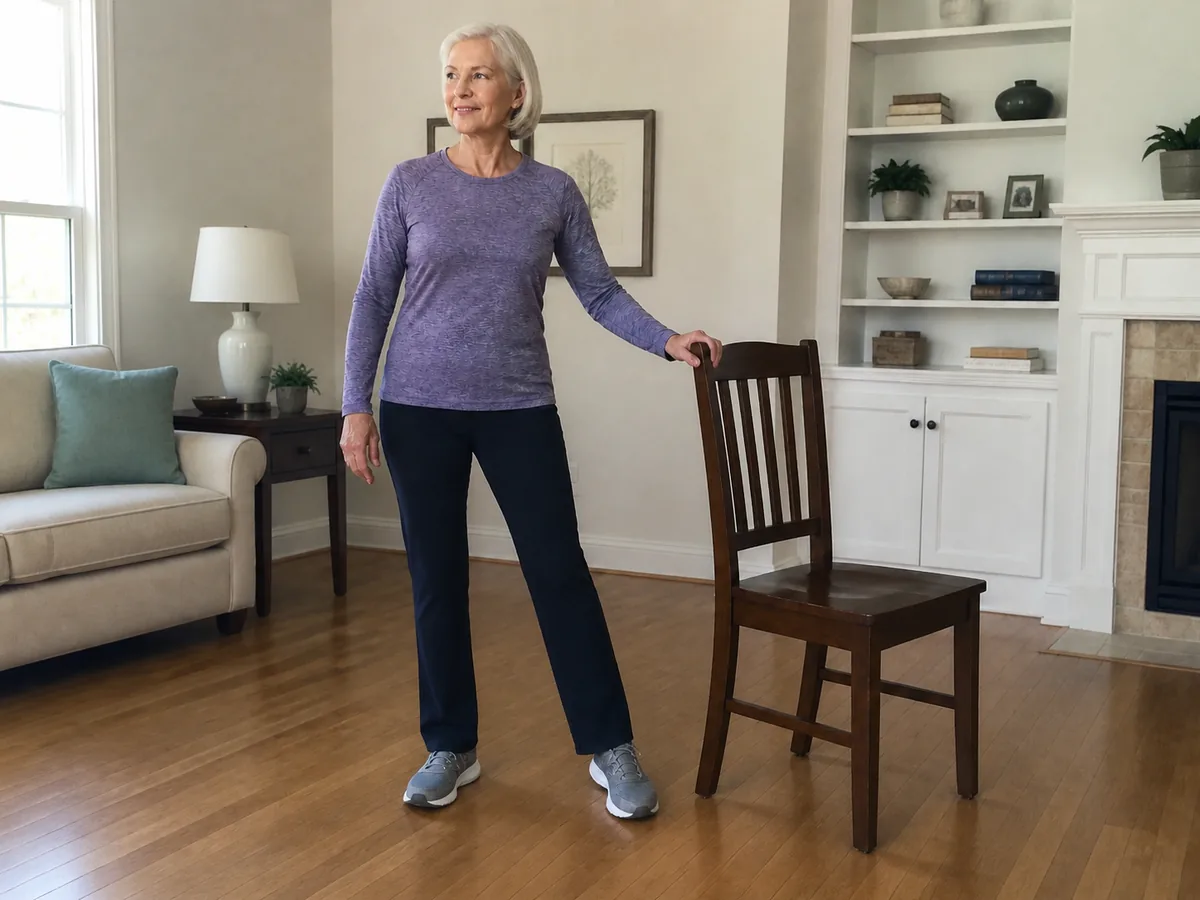
- Stand tall with feet about hip-width apart and one or both hands near the support.
- Shift your weight toward the right foot without lifting either foot.
- Return to center, then shift toward the left.
- Complete 5 shifts to each side.
Keep your shoulders level. The movement should come from transferring weight, not leaning the upper body far over one foot.
2. Sideways walk
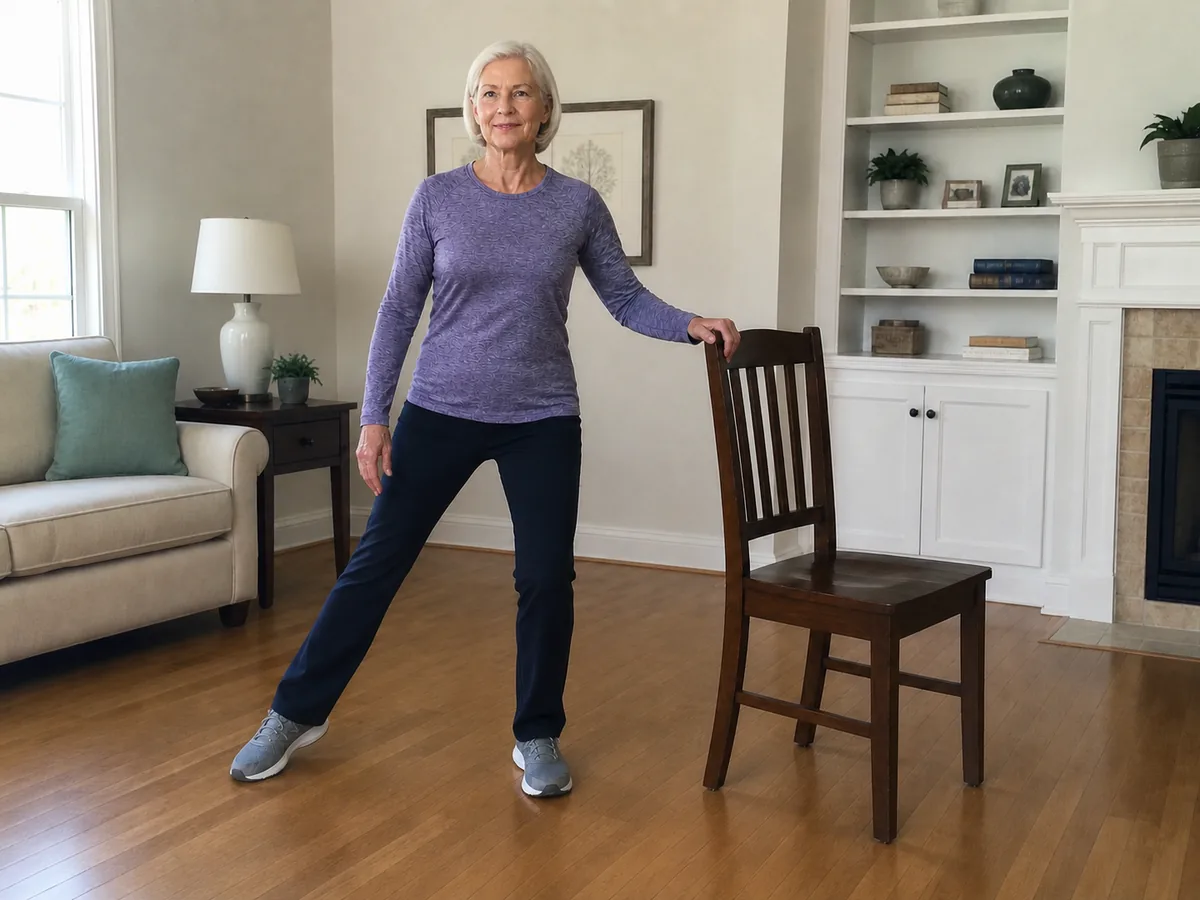
- Face forward beside a counter.
- Step one foot sideways, then bring the other foot toward it without crossing your legs.
- Take 5 slow steps in one direction, pause, then take 5 steps back.
The NHS recommends slow, controlled side steps and allows fingertip support from a wall when needed. Use a shorter path if five steps would take you beyond your support surface.
3. Heel-to-toe stance
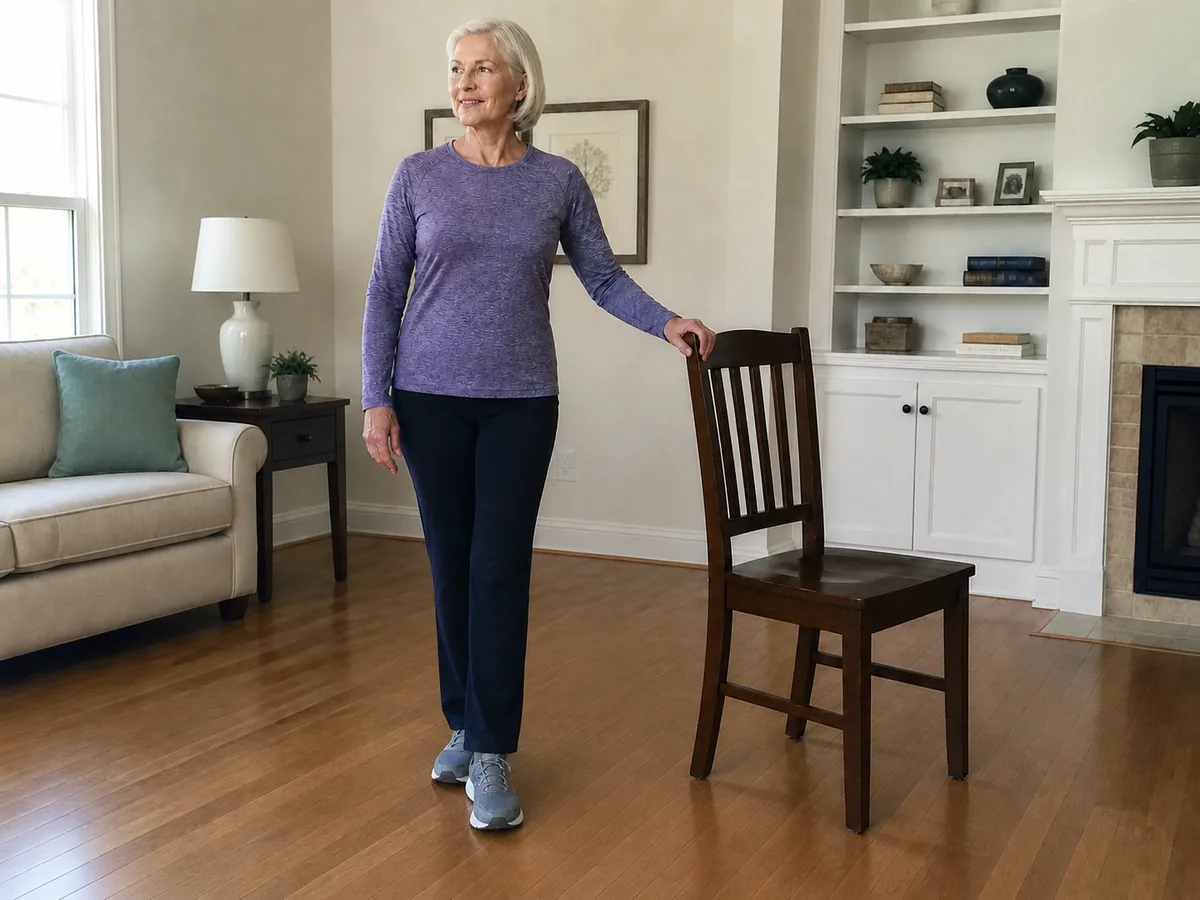
- Place one foot directly in front of the other, as though standing on a narrow line.
- Keep enough space between the feet to feel steady; they do not have to touch.
- Hold for 10 seconds, then switch which foot is in front.
- Do 2 holds per side.
If that position is too difficult, use a semi-tandem stance: move the front foot slightly to the side. If it is easy, use lighter fingertip support before adding time.
4. Supported one-leg stand
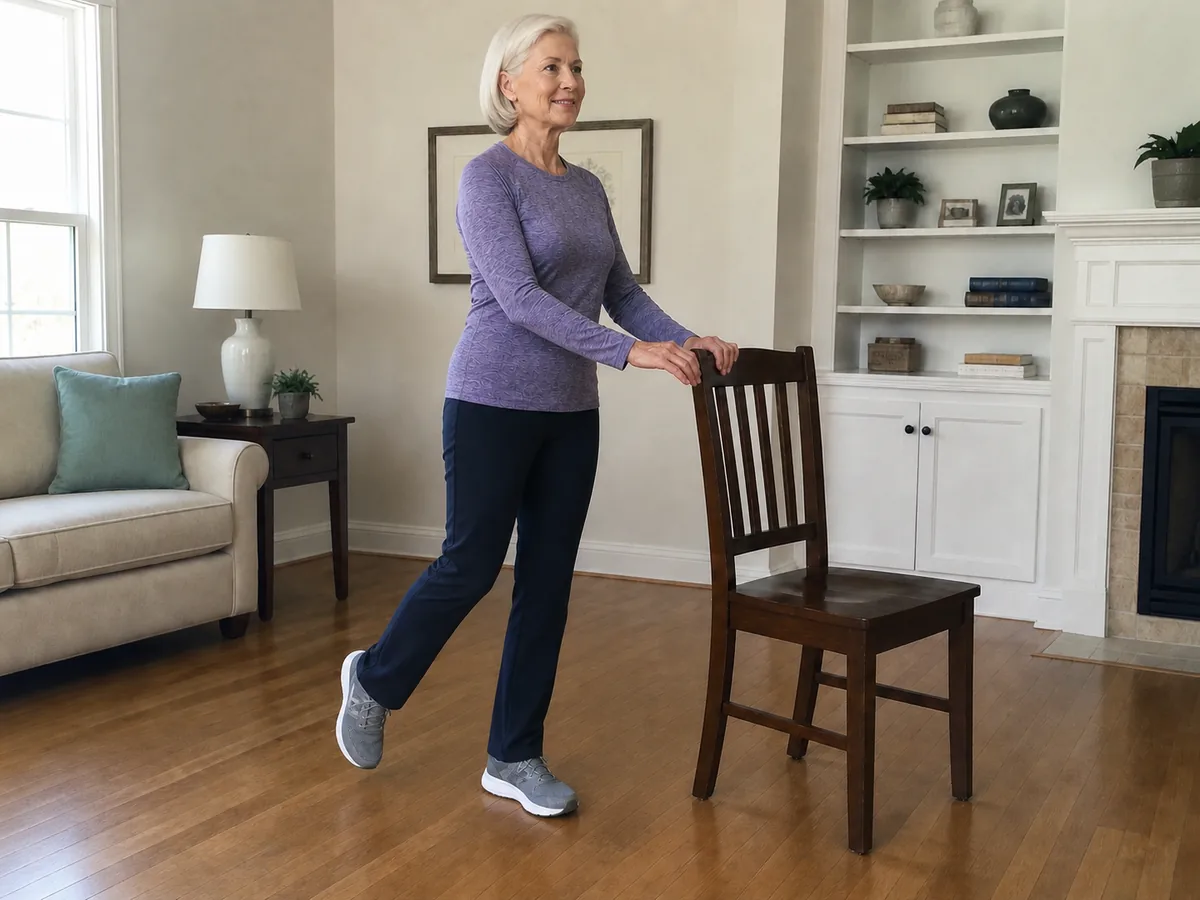
- Stand facing a wall or counter with fingertips resting on it.
- Bend one knee slightly and lift that foot just off the floor.
- Hold for 5 seconds, then lower the foot with control.
- Do 3 holds per side.
Keep the standing knee soft rather than locked. The NHS starting range is a 5- to 10-second hold for three attempts on each side; use the lower end until both sides feel steady.
5. Sit-to-stand
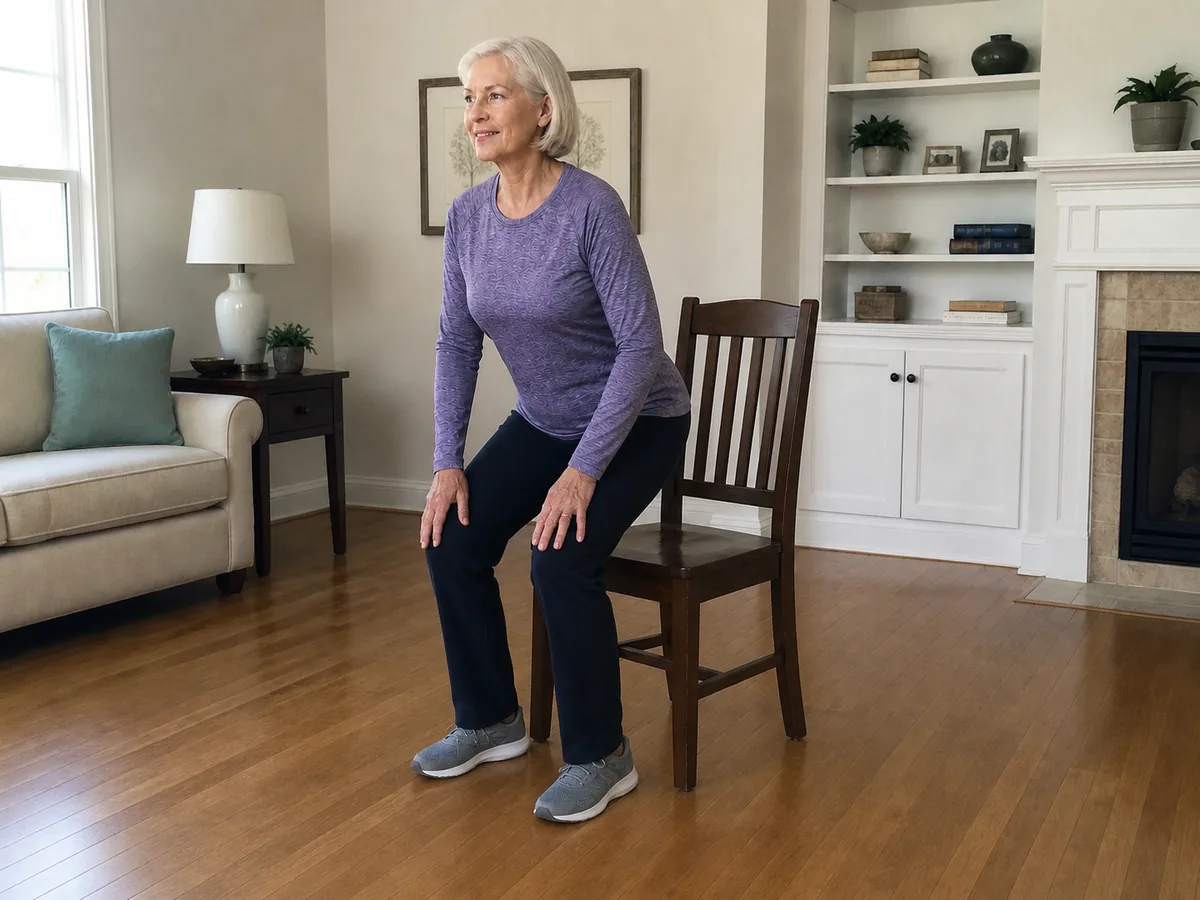
- Sit near the front of a stable chair with feet flat and slightly behind the knees.
- Lean forward from the hips and stand up.
- Pause, then lower yourself slowly back to the chair.
- Do 5 repetitions.
Use the armrests or a nearby counter if needed. Do not use a chair that slides. If standing fully is not yet controlled, practice shifting your weight forward and lifting only slightly from the seat with qualified guidance nearby.
How to make it easier or harder
Change only one variable at a time.
| If the routine feels... | Change for the next session |
|---|---|
| Unsteady | Use both hands, widen the stance, or reduce each set |
| Controlled but tiring | Repeat the same amounts before progressing |
| Controlled for two or three sessions | Use lighter fingertip support or add one repetition |
| Easy with good form | Add a second round, not speed |
| Uneven between sides | Keep the easier dose for both sides and ask for guidance if the difference is new |
Do not progress by closing your eyes, standing on cushions, or moving away from support on your own. Those changes remove useful visual or surface information and can raise fall risk quickly.
A simple weekly schedule
- Monday: one round
- Wednesday: one round
- Friday: repeat one round; add a second only if the first remains controlled
Balance activity is one part of a complete weekly plan. CDC guidance for adults 65 and older also includes aerobic activity and muscle-strengthening activity. This short routine does not replace those parts or an exercise plan prescribed for a medical condition.
What progress should look like
Useful progress is quieter than a dramatic challenge. You may need less pressure through your fingertips, place your feet more accurately, stand from the chair with better control, or finish one round without rushing. Record only the exercise and version you completed; there is no need to turn the session into a large tracking system.
If balance is getting worse, falls or near-falls are increasing, or dizziness appears when you stand, do not solve that by practicing harder. A clinician or physical therapist can check whether vision, medication, blood pressure, strength, footwear, or another issue needs attention.