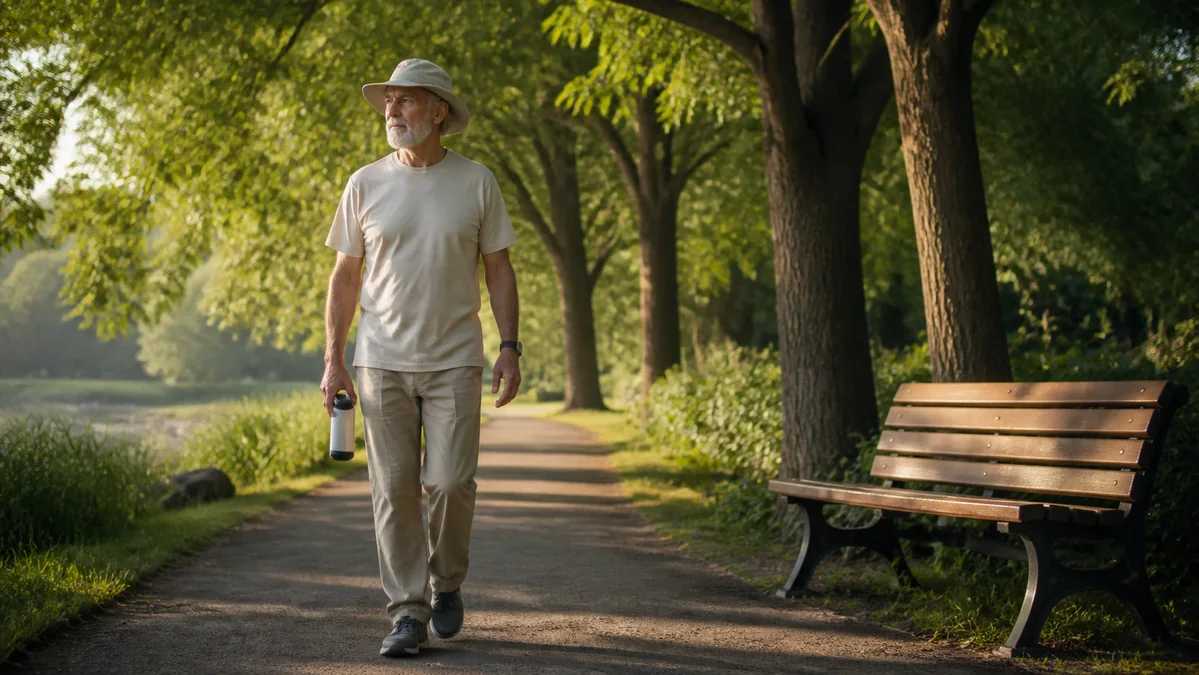
Summer does not mean you have to stop walking. It does mean the routine may need to change. The safest version of a July walk is often not the same as the safest version of an October walk.
Quick answer: Walk earlier, shorten the route, carry water, and give yourself permission to stop early. CDC heat guidance notes that adults 65 and older are more prone to heat-related problems, and many health conditions or medicines can raise the risk further.
This is general lifestyle information, not medical advice. If your clinician limits fluids or has warned you about heat, follow that guidance first.
Why heat hits differently after 60
The CDC notes that older adults do not adjust as well to sudden changes in temperature and may also take medicines or live with conditions that affect heat tolerance.
That does not mean "do not walk." It means the walking plan should respect the weather instead of treating it like a personal challenge.
Common reasons a normal route becomes too much in hot weather:
- the same distance now has less shade
- humidity slows cooling
- the route has no place to stop
- you start too late in the day
- recovery takes longer than expected
The smarter goal is consistency, not pride.

Step 1: Move the walk earlier
The easiest heat adjustment is timing.
If possible, walk:
- early morning
- after sunset if the route is well lit and feels safe
- during the coolest window your routine allows
Avoid treating midday sun like a test of discipline. A shorter early walk often does more for consistency than a longer hard walk that leaves you wiped out for the rest of the day.
Internal link: if you are rebuilding the habit itself, Beginner walking plan for seniors pairs well with this hotter-weather version.
Step 2: Shrink the route before the weather forces you to
Hot-weather walking works better when you plan a short loop rather than a long out-and-back that commits you too early.
Look for routes with:
- shade
- benches
- easy turn-back points
- nearby indoor cooling options
A smaller loop makes it easier to stop after 8 or 10 minutes without feeling stranded far from home.
That is not "quitting." It is route design.
Step 3: Drink and cool on purpose
The CDC recommends drinking more water than usual during hot weather and not waiting until you are thirsty. It also notes that people taking water pills or living with certain conditions should ask their doctor how much to drink.
Practical ways to make that easier:
- drink before you head out
- bring water if the walk goes beyond a very short loop
- cool down indoors after the walk instead of standing in the sun talking afterward
If you come back flushed and linger outside doing chores, the walk may not be the only heat load your body is managing.
Internal link: Hydration tips after 60 can help if drinking enough is the hardest part of the plan.
Step 4: Lower the pace before you lower the confidence
Many people try to "keep their normal pace" and end up deciding they are losing fitness. In heat, pace is often the wrong thing to protect.
Protect these instead:
- steady breathing
- good posture
- clear thinking
- a finish that still leaves energy for the rest of the day
If slowing down keeps the habit going, that is a successful adjustment.
Step 5: Know when to stop early
The CDC says to seek medical care right away for symptoms of heat-related illness such as headache, nausea or vomiting, or muscle cramps. Even before that point, take an early stop seriously.
Stop, cool down, and reassess if you notice:
- unusual dizziness
- headache
- nausea
- confusion
- unusual weakness
Do not argue with those signs because you are "almost done."
A good summer walking plan
Try a simple hot-weather version:
- Walk earlier than usual.
- Cut the route to a shorter shaded loop.
- Bring water or drink before you leave.
- Stop while you still feel steady.
- Cool down indoors.
That approach protects the habit without turning every hot day into an endurance decision.
Mistakes that make heat walks harder
- starting late because the morning got busy
- taking the longest route because it used to feel easy
- waiting to drink until you already feel depleted
- trying to keep the same pace as cool-weather days
- treating an early stop as failure instead of good judgment