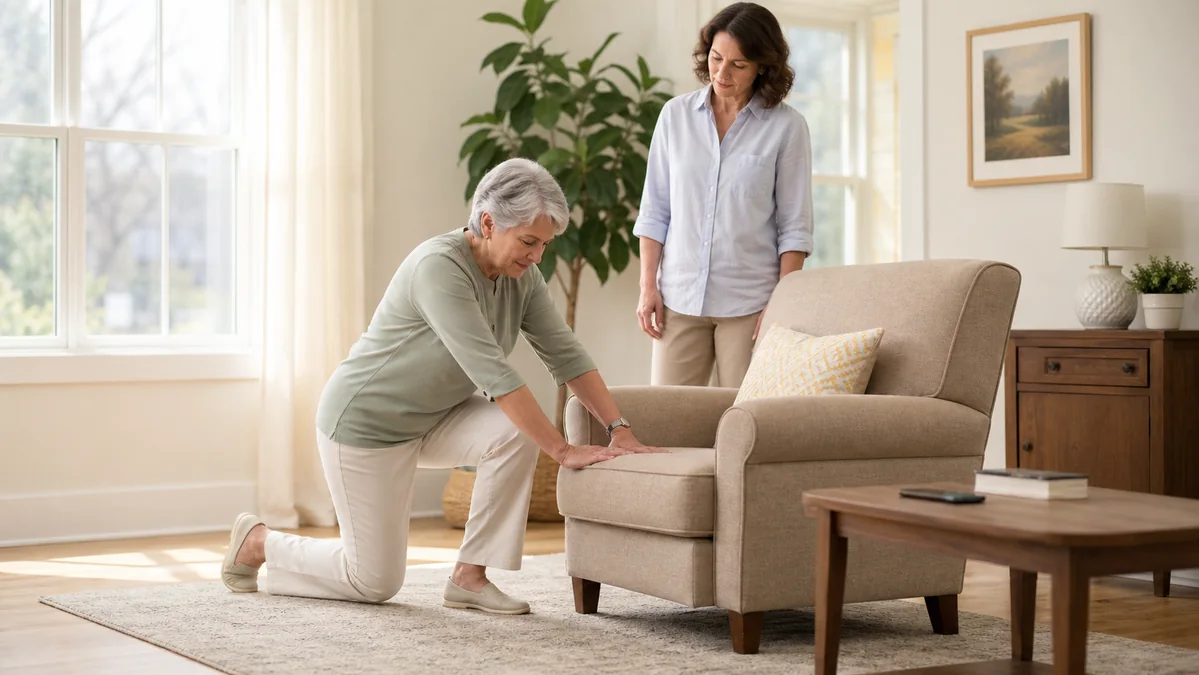
Most falls don’t require a dramatic rescue, but the minutes right after a fall matter. The safest approach is calm and methodical: pause, check for injury, and use a stable support to stand up. Rushing is how a minor slip becomes a bigger problem.
Quick answer: If you may be injured, dizzy, or unable to put weight on a limb, don’t try to stand—call for help. If you’re okay to move, roll to your side, get onto hands and knees, use a sturdy chair, and stand up slowly.
This guide is general safety information, not medical advice. When in doubt, prioritize getting help.
Decide first: is it safe to try to stand?
Before you move much, do a quick check:
- Do you have severe pain, bleeding, or a head injury?
- Are you dizzy, short of breath, or confused?
- Can you move arms and legs normally?
- Can you put weight on your ankle/knee/hip without sharp pain?
If any of these are concerning, stay where you are and call for help (or use a medical alert device if you have one). If you’re alone, focus on getting attention rather than “powering through.”
Internal link: if you want a home setup that reduces fall risk overall, start with Fall prevention habits at home.
Set up a “safe stand” spot in your home
The best time to plan is before you need it. Pick one sturdy support in each main area:
- A solid chair that won’t roll
- A couch with a firm arm
- A stable countertop edge (not a lightweight table)
Also keep a phone within reach in common rooms. If you use emergency features, it helps to practice once with a family member so it feels familiar.
Internal link: Set up Emergency SOS on iPhone and Android can be part of that practice.
A step-by-step floor-to-stand method (practice slowly)
This is easier if you practice once on purpose when you feel well. Use a carpet or mat and a sturdy chair nearby.
- Pause and breathe. Let the initial surprise pass.
- Roll onto your side. Keep movements small and controlled.
- Move onto hands and knees. Crawl toward the sturdy chair if needed.
- Bring one foot forward into a half-kneel. One knee down, one foot planted.
- Place both hands on the chair seat/arm. Test that it won’t slide.
- Push up slowly to stand. Take a moment before walking.
If you feel wobbly once you’re up, sit on the chair and rest. Standing is not the finish line; stability is.

Small technique details that make it safer
These sound minor, but they reduce strain:
- Avoid twisting your trunk quickly; turn your whole body instead.
- Don’t pull on a lightweight table—it can tip.
- Keep your head and eyes steady; sudden head movement can trigger dizziness.
- If you wear slippers, consider switching to grippy socks or bare feet before standing.
If the room is cluttered, don’t try to “tidy” while on the floor. Focus on stable support and a clear path to a seat.
Internal link: a broader safety sweep is in Home safety checklist for older adults.
After you’re up: do a 60-second check
Once you’re standing, pause before you continue your day. Sit down, breathe, and notice whether pain or dizziness shows up after the adrenaline fades. If you hit your head, have increasing pain, or feel unusually unsteady, it’s safer to get help than to “walk it off.”
If you can’t get up, you can still get safer
Sometimes the right choice is staying down while you wait for help. If you’re on the floor and can’t stand:
- Try to roll onto your side or into a comfortable position.
- Use a pillow or folded towel under your head if reachable.
- Keep warm with a blanket if nearby.
- Make noise (tap a wall, use voice commands, call out) if you need attention.
If you’re alone, a phone’s voice assistant or emergency calling feature can be a big help.
Practice once, then make the room easier
Practice reduces panic. After you practice once, do one “room friction” improvement:
- Remove a loose rug edge
- Improve lighting on a hallway route
- Put a sturdy chair in the spot you spend the most time
If you’re building balance confidence at home, gentle daily practice helps.
Internal link: Balance confidence at home after 60 can pair with this so the room and the body improve together.